



 Education, Membership and Standards Directors
 Fellows
 Award Programs
 Society Governance







 Section Officers and Managers
 Section Event Non-Member Sign-Up


 Standards Projects
 Registration Authority
 SMPTE GitHub
 Patent Statements
 Advisory Notes
 Appeals
 Work with SMPTE

 Virtual Courses
 Webcasts
 IP Boot Camp
 Wallcharts
 Board of Editors
 Editorial Calendar
 Guidelines for Submitting
 Subscribe
 Motion Imaging Journal

 2025 Media Technology Summit
 2025 NAB Show Video on Demand
 2024 NAB Show

 Contact Us
 Newsletter
 Newswatch
 Media Kit
 Get Alerts!
 Support Request
 SMPTE Stories
 SMPTE Logos
 - About
-
Membership
Section Benefits
-
Standards
-
Education
ResourcesContribute to the Journal
- Events
-
Connect With Us
Connect With Us


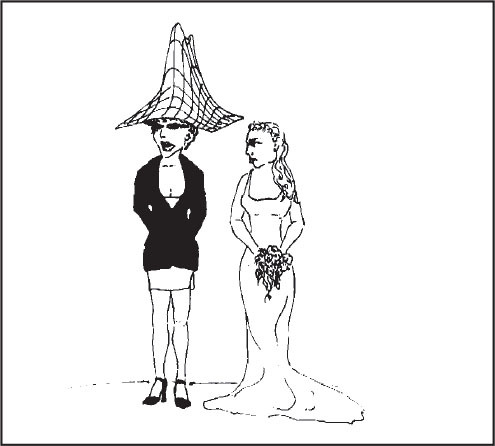
The September 2000 Journal published in: "Navigating the Rapids of DTV Standards Conversion" by Peter Wilson: "In the modern world of digital television (DTV), lives have become complicated beyond all reason. For various technopolitical reasons, television formats come in an abundance of flavors; 703 are worst case (for up and down conversion there are 19 DTV variants and 37 HDTV variants)! Progressive or interlace exists in a multitude of field or frame rates, therefore, users or originators of DTV programming may have to deal with all of these formats… Phase correlation (Ph.C) is the most successful method to date… In practical systems a steered block matching type process follows phase correlation (Fig. 7)." For the full article, see: https://tinyurl.com/yc8jmk6u
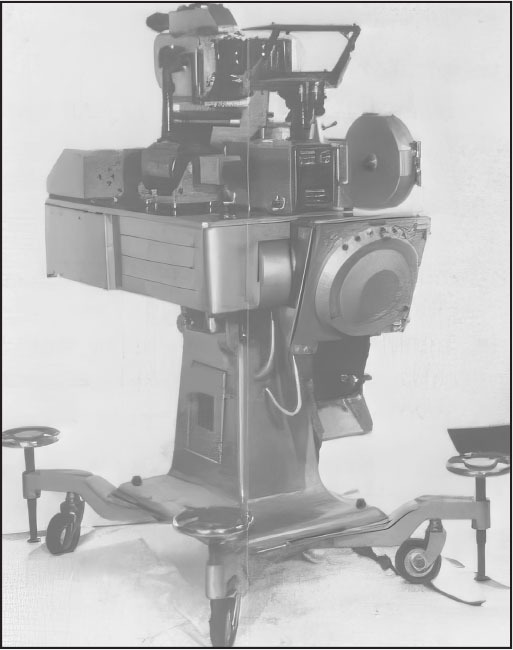
The September 1975 Journal published in: "Union of Soviet Socialist Republics—Cinematography Addendum to the Progress Committee Report" by V. L. Trusko: "Motion-picture theaters in the USSR continue to enjoy a high degree of popularity. The yearly attendance reached 4.6 billion in 1974, which means that, on the average, each person in the USSR visited a motion-picture theater 18.3 times during the year and 235 new full-length feature films were produced. At present, 690 wide-screen motion-picture theaters and movie halls are equipped for showing films printed on 70mm stock. Some of the films, released in 1974, were photographed on 70mm negative stock and a number of films were enlarged to 70mm positives from 35mm masters. The principal thrust of Soviet developments in cinematography includes improvement in the techniques of film production, the search for new types of cinematographic facilities and the building of new motion-picture theaters ….Figure 1 shows an overall view of the Luch equipment (type 35-FPV) which is intended for composite photography by the front-projection technique on 35mm monochrome or color film in both normal and wide-screen frame formats." For the full article, see: https://tinyurl.com/3h4uxp8j
The September 1950 Journal published in: "68th Convention," "RESERVATIONS are coining into the Lake Placid Club and to the Hotel Marcy, these in response to the Convention Advance Notice which went to all members in mid-August…PAPERS have been scheduled for ten technical sessions; two evenings will be devoted to awards and Banquet; one evening is reserved for prerelease showing of a feature motion picture; and a prerelease feature motion picture will also be shown on one afternoon…AT LAKE PLACID, there will be a program with many attractions: some new subjects and some generally familiar ones newly high-lighted; entertainment and recreation of inviting variety." For the full article, see: https://tinyurl.com/ybvzttzc
The September 1925 Transactions published in: "Infra-Red Photography in Motion Picture Work" by J. A. Ball: Photographs by infrared light were first made some years ago by Professor R. W. Wood, of Johns Hopkins University. He noted that the most striking features of these pictures were that blue skies were rendered very dark, whereas green foliage was rendered very light. Photographs by infrared light with these characteristics have remained more or less of a scientific curiosity ever since. In Professor Wood’s day the available photographic sensitivity in the infrared was very low and the required exposure very long; furthermore, no one had pointed out a practical use for this effect. More recently, Haller has announced an infra-red sensitizer which gives considerably increased speed and this, in combination with the Technicolor film sensitizing technique, has made possible a film semitized in the infra-red which can be produced uniformly and economically in any quantity, large or small, and of sufficient speed to allow for good exposures in motion picture work." For the full article, see: https://tinyurl.com/34vepzz3